The purpose of cookies is to store information about your preferences (such as language selection or other display preferences), to manage the session and to facilitate browsing.
Reject Cookies
Accept Cookies
History, memory and place
Dimitsana Timeline
Follow Dimitsana through the people, monasteries, buildings and events that shaped its historical identity.
76
entries
5
themes
700 BCE – 2025
period
All history
Ancient and Late Antique Arcadia
700 BCE – 330
6
Byzantine and monastic roots
331 – 1453
5
Ottoman period
1454 – 1820
22
Greek Revolution
1821 – 1830
7
Modern memory
1831 – today
36
Guided experience
Dimitsana through the centuries
Follow the long arc of Dimitsana’s identity: ancient Arcadia, monastic life, education, gunpowder, revolution and preservation.
700 BCE – 2025 22 stops
Ancient and Late Antique Arcadia
700 BCE
700 BCE
History
The Ancient City of Teuthis
An ancient Arcadian city tied to Pausanias, myth, civic memory and the wider landscape of Dimitsana.
Why it matters
It anchors Dimitsana in the much older Arcadian landscape of myth, civic life and ancient settlement.
371 BCE
371 BCE
History
Teuthis and the Arcadian League
Teuthis enters the wider story of Arcadian federal politics around the foundation of Megalopolis.
Why it matters
It connects local ancient memory with the larger Arcadian experiment of federation, defense and political reorganization.
300 BCE
300 BCE
History
Ancient Gortys and the Lousios Sacred Landscape
Ancient Gortys adds sanctuary, healing and river-route context to the historical landscape around Dimitsana.
Why it matters
It broadens the timeline from village history to the ancient cultural geography of the Lousios valley.
194 BCE
194 BCE
History
Teuthis issues coinage
Evidence of civic life and regional networks in Hellenistic Arcadia.
Why it matters
Coinage is material evidence of organized civic identity and participation in wider Arcadian networks.
170
170
History
Pausanias visits Teuthis
Describes a walled city with an Acropolis and Athena’s statue with a bandaged thigh.
Why it matters
Pausanias preserves a rare written window into the ancient city and its sacred landscape.
300
300
History
Christianization of the area
Early Christian basilicas attest to an established Christian community.
Why it matters
The basilicas show the area’s transition from ancient civic religion to established Christian community life.
Byzantine and monastic roots
350
350
History
Late Antique contraction
City shrinks amid raids, disasters and wider crisis.
Why it matters
The contraction explains why settlement memory shifted and why later medieval continuity matters.
700
700
History
Slavic groups settle and assimilate
7th–8th c.: peaceful pastoral groups integrate into local society.
Why it matters
The episode shows that Dimitsana’s identity was shaped by movement, adaptation and local integration.
963
963
Buildings
Philosofou Monastery
One of Greece’s oldest monastic monuments.
Why it matters
It connects the Lousios Gorge with monastic life, learning, landholding and the long spiritual memory of the region.
967
967
History
First Mention of Dimitsana
A historic Arcadian town linking faith, learning, and the fight for freedom.
Why it matters
The early reference turns Dimitsana from a place of memory into a named historical community.
1167
1167
Buildings
Early Hermitages at Prodromos Monastery
The Prodromos site preserves memories of earlier hermitages and a church tradition reaching back to the medieval Lousios.
Why it matters
It explains why the Lousios cliffs became a long-lived monastic landscape before the better-documented post-Byzantine monastery.
Ottoman period
1460
1460
History
Education persists in First Ottoman Period
Mountain location and monastic schools sustain learning.
Why it matters
Education persisted because mountain geography and monastic institutions protected learning through difficult times.
1461
1461
History
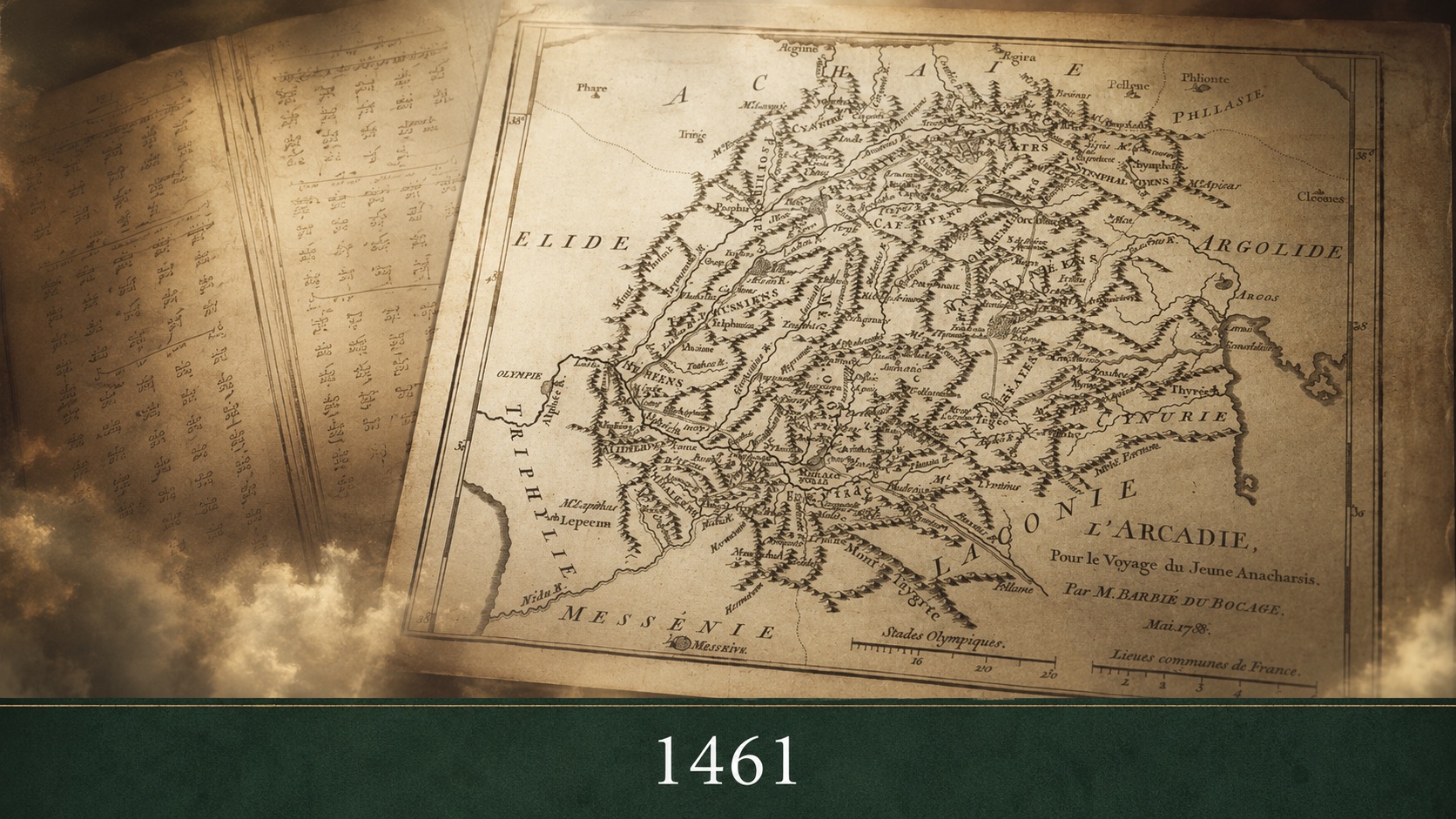
Dimitsana in the first Ottoman register
The TT 10 register records Dimitsana as a large village of the nahiye of Leondar, with 142 households, 31 unmarried adult men and 13 widows.
Why it matters
The entry gives a rare archival snapshot of Dimitsana immediately after the transition from Byzantine-Morean to Ottoman rule, showing a settlement already large enough to function as a local centre.
1461
Buildings
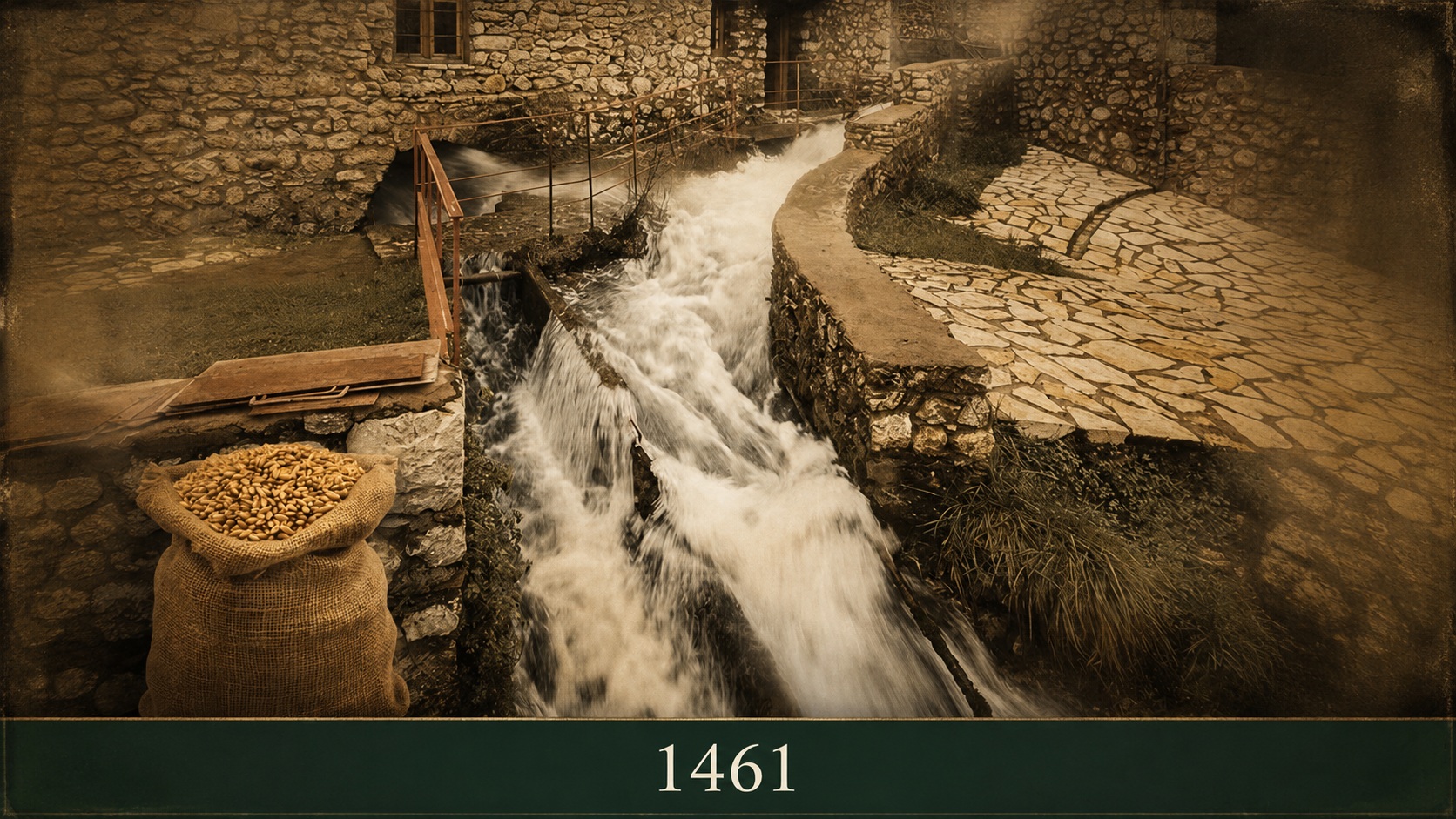
The first recorded mills of Dimitsana
TT 10 records six mills in Dimitsana, connected with families such as Andropoulos, Papaandropoulos, Manes, Laskaris and Kartopoulos.
Why it matters
The mills show that Dimitsana’s water-powered productive landscape has 15th-century archival roots, long before the better-known gunpowder-mill tradition of the revolutionary period.
1500
1500
Buildings
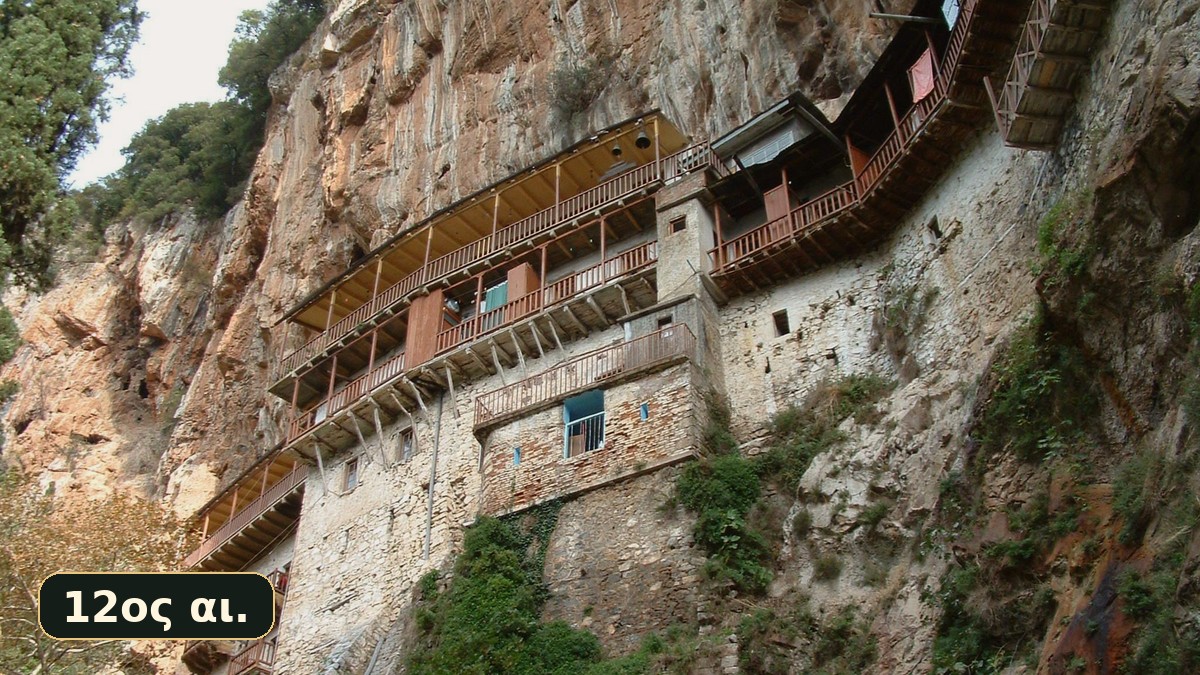
St. John Prodromos Monastery
A cliffside monastic refuge with centuries of spiritual history in the Lousios Gorge.
Why it matters
The cliffside monastery shows how the gorge became a protected landscape of worship, refuge and continuity.
1520
1520–1566
History
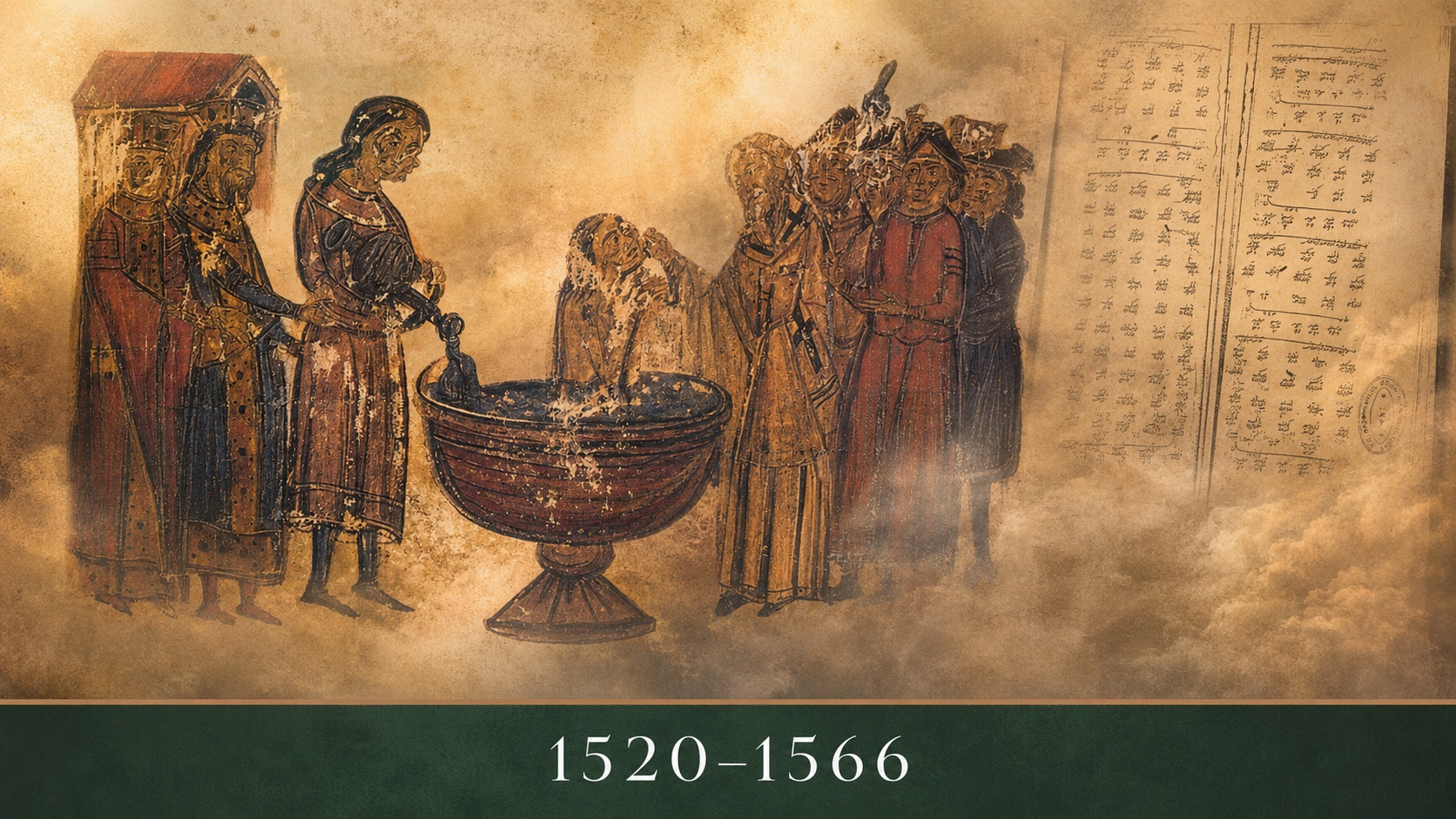
Dimitsana grows during the reign of Süleyman I
In the register of Süleyman I’s period, Dimitsana appears with 350 households and 97 unmarried adult men.
Why it matters
The growth shows Dimitsana becoming a stronger demographic and economic centre of mountainous Arcadia before the better-known 18th-century school and 19th-century revolutionary period.
1520–1566
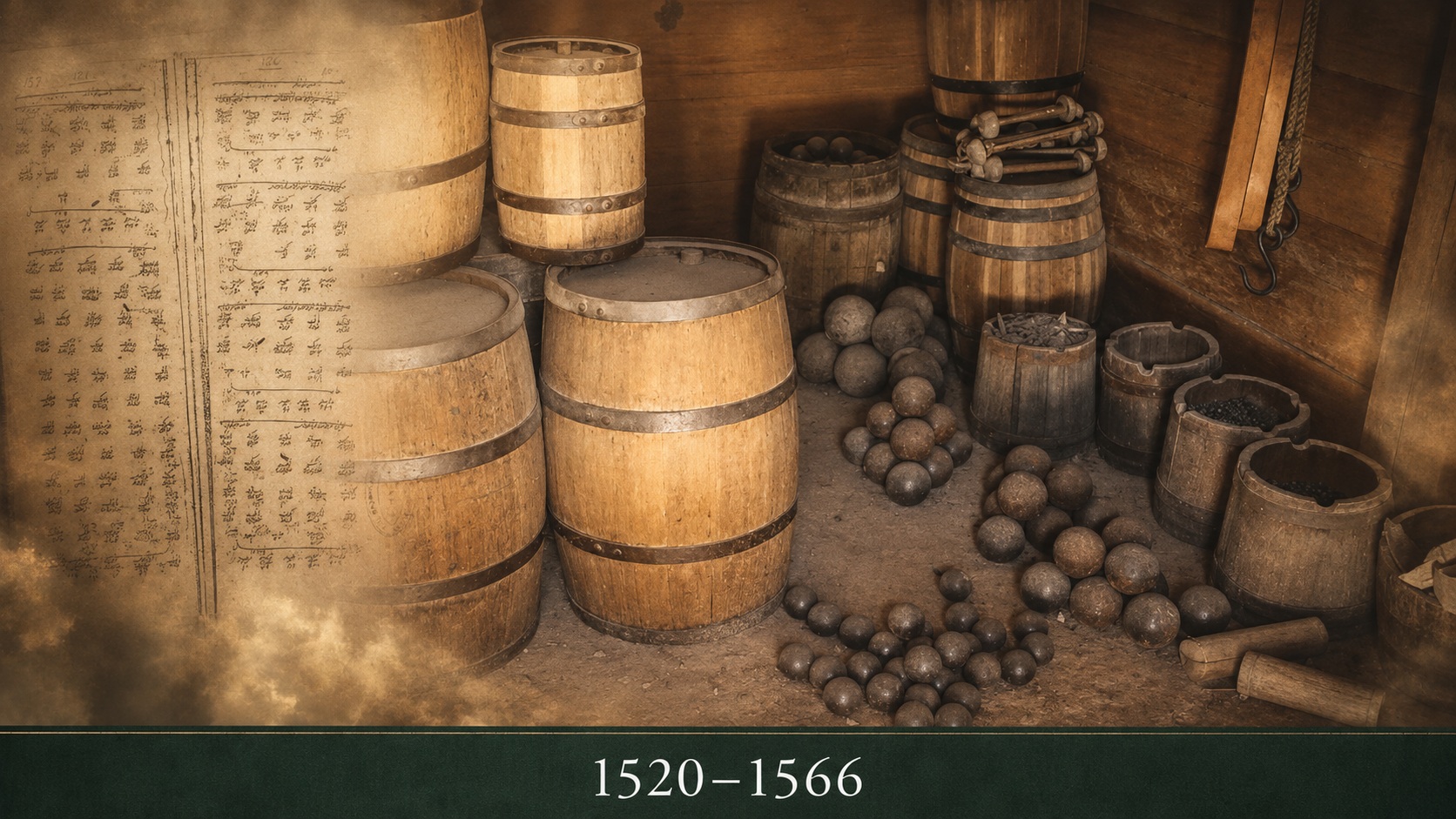
History
First archival evidence of gunpowder production in Dimitsana
The Ottoman register TT 446 records gunpowder mills and Dimitsana residents producing black powder for fortresses in the Morea.
Why it matters
This evidence moves the documented history of Dimitsana’s gunpowder production back to the 16th century, well before the revolutionary use of the gunpowder mills in 1821.
1566
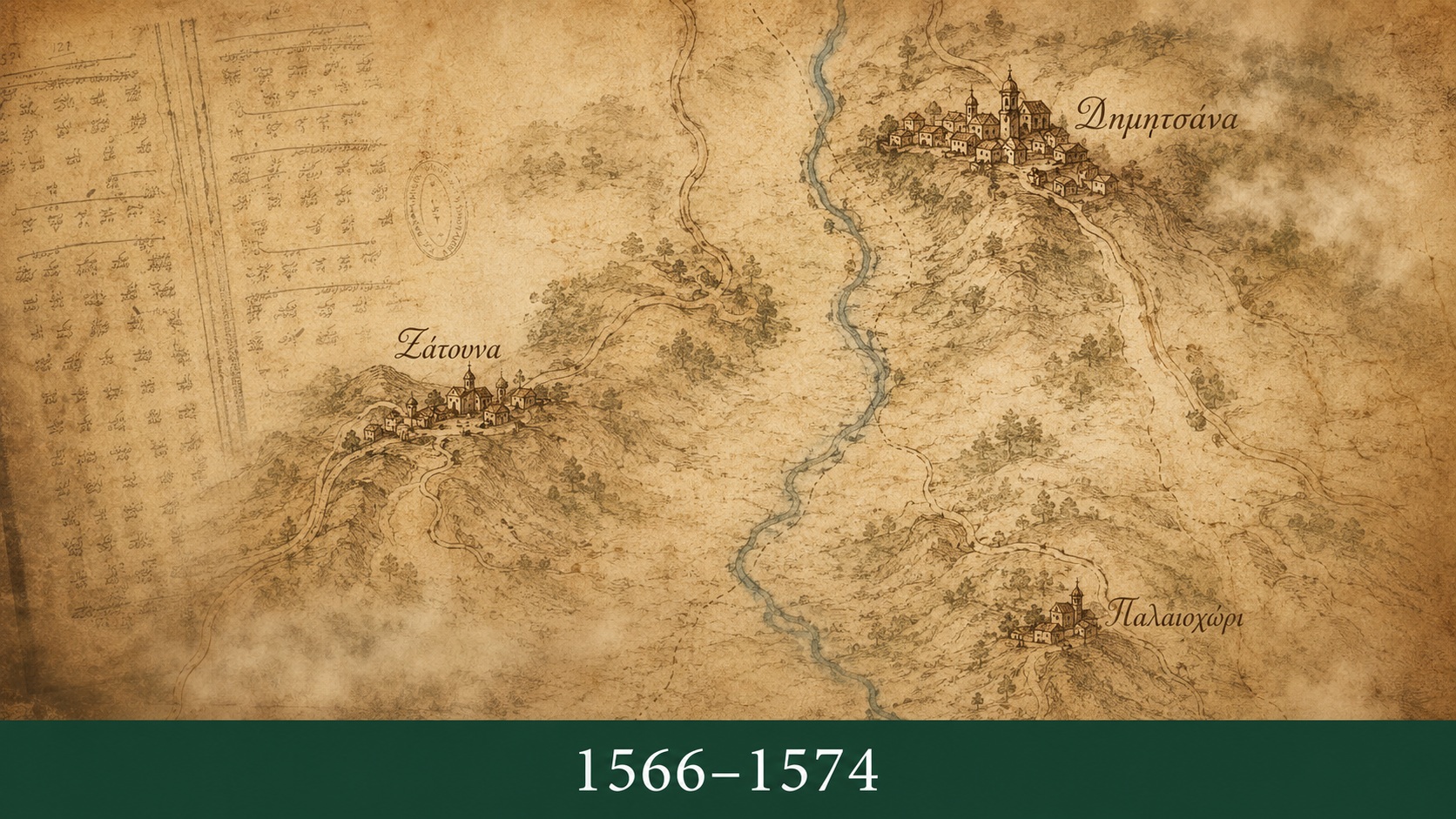
1566–1574
History
Zatuna and Paleohor recorded together with Dimitsana
In register TT 560, two settlement units, Zatuna and Paleohor, appear in connection with Dimitsana.
Why it matters
The entry shows Dimitsana as the centre of a wider local settlement network, not only as an isolated mountain village.
1608
1608
Buildings
Aimialon Monastery
A 17th-century cliffside monastery blending spiritual devotion, local lore, and heroic sacrifice.
Why it matters
Its 17th-century foundation broadens the monastic network that shaped the religious geography around Dimitsana.
1608
People
Theophanes III of Jerusalem
The Dimitsanite Theophanes Karakallos becomes Patriarch of Jerusalem, expanding the village’s ecclesiastical story beyond 1821.
Why it matters
It shows that Dimitsana’s ecclesiastical influence was already visible in the early Ottoman centuries.
1650
1650
People
Petrakis Papastamatis in Athens
A Dimitsanite physician-philosopher linked to the founding of Petraki Monastery.
Why it matters
His life shows the outward reach of Dimitsanite learning into medicine, philosophy and urban religious life.
1691
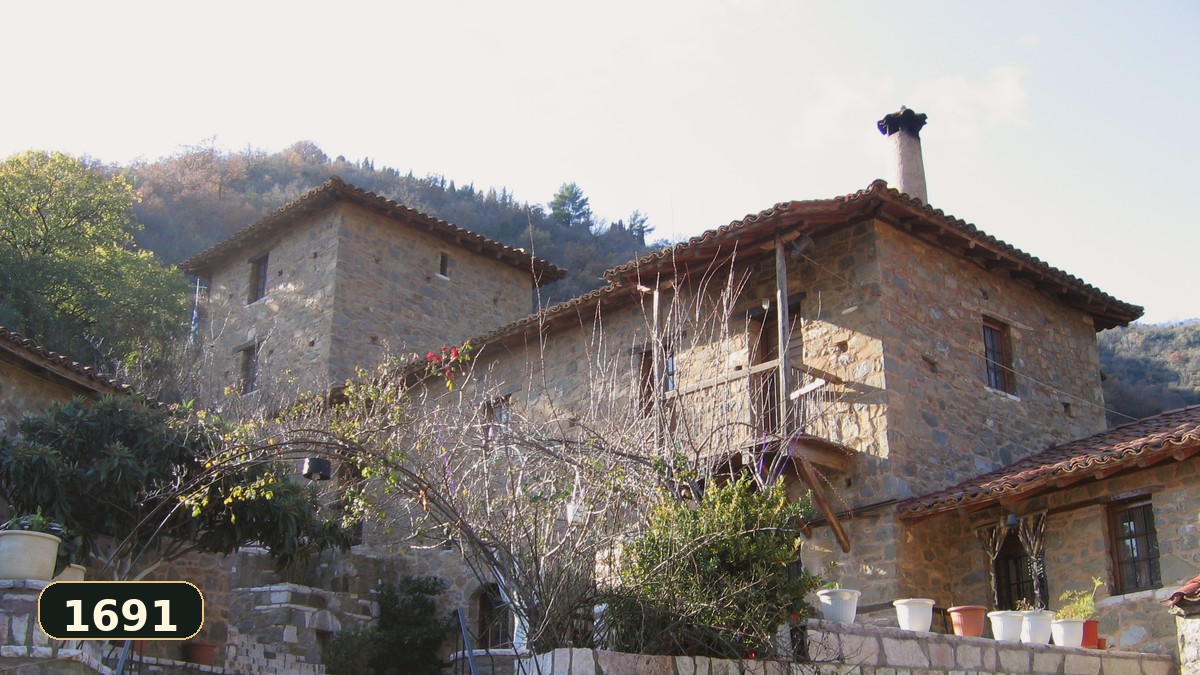
1691
Buildings
The New Philosophou Monastery
The newer katholikon of Philosophou Monastery is founded in 1691 and decorated in 1693.
Why it matters
It shows the continuity of the Philosofou tradition from the rock-cut monastery to a later organized monastic complex.
1710
1710
History
Gunpowder Mills Begin
First mills recorded near Dimitsana.
Why it matters
The first powder mills prefigure the technical knowledge that later made Dimitsana vital to the Revolution.
1746
1746
People
Birth of Gregory V
Three-time Ecumenical Patriarch, executed in 1821, remembered as a saint and national martyr.
Why it matters
Gregory V links Dimitsana with the highest level of Orthodox leadership and with the martyr memory of 1821.
1764
1764
Events
Dimitsana School Founded
From monastic learning to an organized educational institution in 18th-century Dimitsana.
Why it matters
It marks the moment when Dimitsana became a major center of Greek letters, linking monastic learning, community patronage and revolutionary-era education.
1770
1770
Events
Orlov Revolt disrupts Dimitsana
After 1769–1770 unrest, the Dimitsana School pauses operations.
Why it matters
The disruption reveals how wider geopolitical shocks affected local education and community stability.
1771
1771
People
Birth of Germanos of Old Patras
Archbishop who played a key role in the Greek War of Independence, blending diplomacy, faith, and action.
Why it matters
Germanos connects Dimitsana’s learned tradition with ecclesiastical leadership during the struggle for independence.
1789
1789
People
Panagiotis Kalas “Tsopanakos”
A folk satirical poet from Dimitsana whose verses preserve a popular voice of the revolutionary period.
Why it matters
He broadens the timeline from leaders and monuments to the spoken and sung culture of the people.
1790
1790
People
Birth of Nikolaos Makris — National Benefactor
Dimitsanite benefactor whose diaspora wealth supported education, public buildings and the modern profile of the village.
Why it matters
Makris represents the connection between migration, commerce, benefaction and the educational architecture of modern Dimitsana.
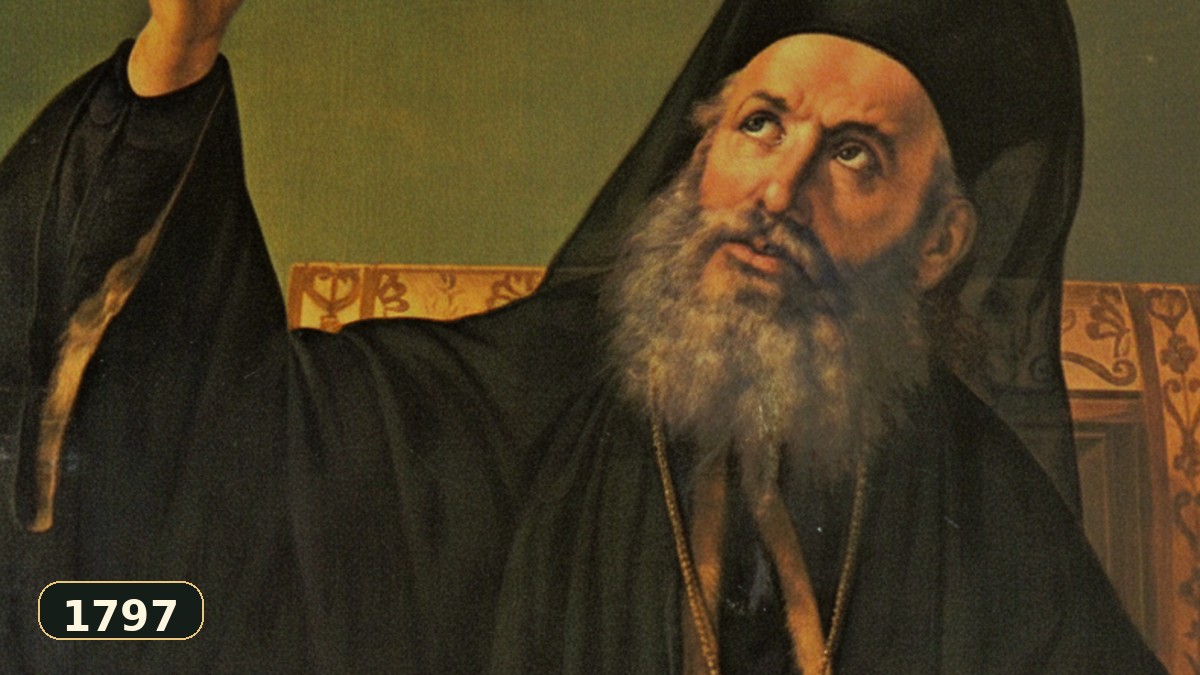
1797
1797
People
Gregory V becomes Ecumenical Patriarch
Gregory V, born in Dimitsana, is elected Ecumenical Patriarch of Constantinople for the first time.
Why it matters
It gives Gregory V’s Dimitsana story institutional weight before the tragedy of 1821.
1798
1798
People
Birth of Michael Oikonomou
Michael Oikonomou is born in Dimitsana and later becomes secretary of Kolokotronis and historian of 1821.
Why it matters
It adds a Dimitsanite voice of documentation and historical memory to the Revolution narrative.
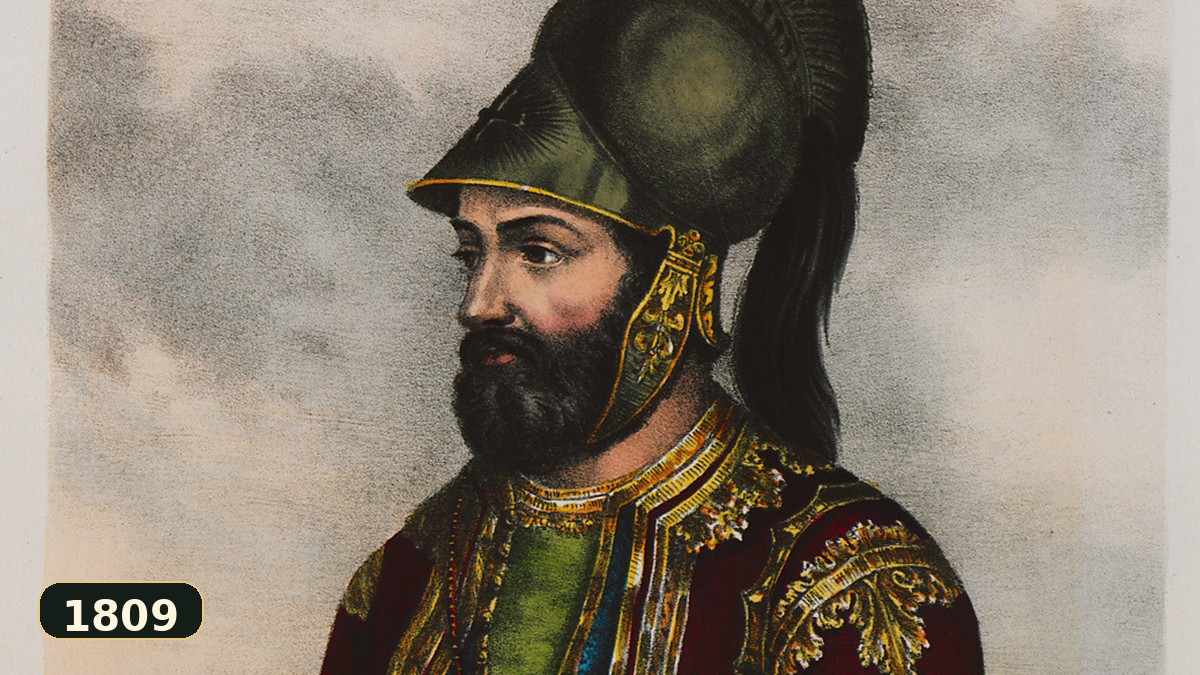
1809
1809
People
Papaflessas studies at Dimitsana
Georgios Dikaios, later Papaflessas, studies at the renowned School of Dimitsana.
Why it matters
It shows how the School of Dimitsana educated not only clergy, but future revolutionary personalities.
1818
1818
Events
Dimitsana and the Filiki Eteria
Local elites and artisans inducted ahead of the Revolution.
Why it matters
It places Dimitsana inside the underground networks that prepared the Greek Revolution.
Greek Revolution
1821
1821
History
Dimitsana and the 1821 Revolution
Education and gunpowder fueled Dimitsana’s decisive role in Greece’s fight for freedom.
Why it matters
It reveals the technical world behind the famous revolutionary memory of Dimitsana: knowledge, water power and gunpowder.
1821
Events
Spiliotopoulos brothers restart powder mills
Return from Hydra to renovate and operate the old mills.
Why it matters
The brothers connect local technical skill and family initiative with the material needs of the Revolution.
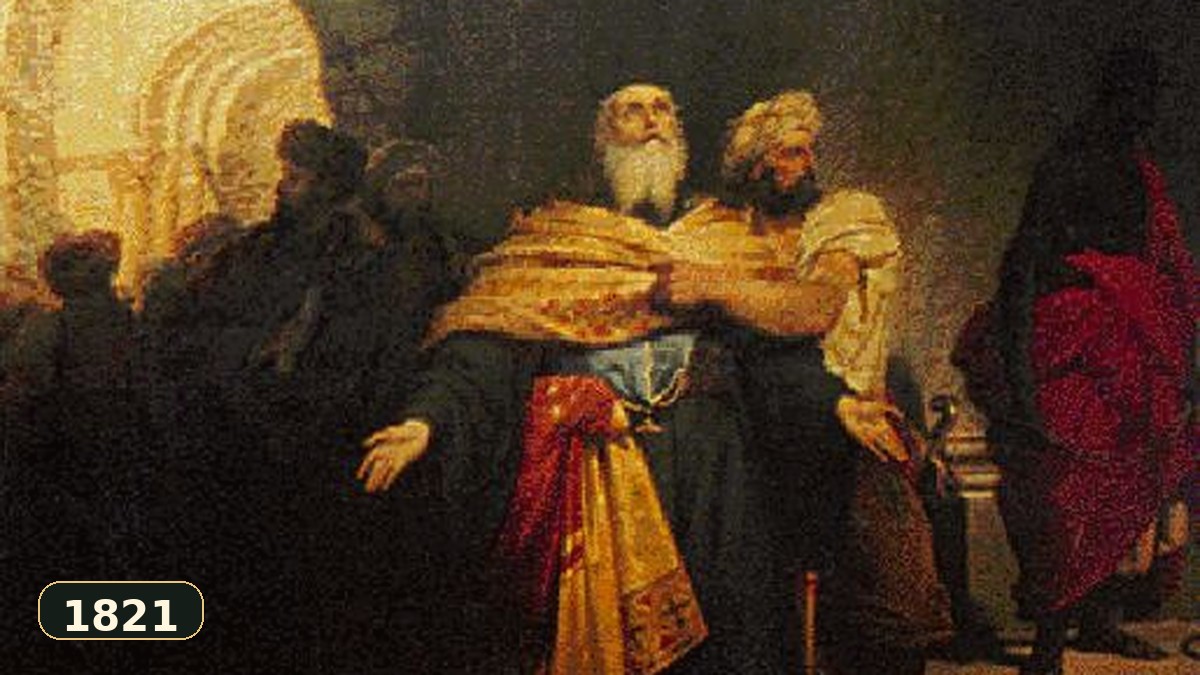
1821
Events
Martyrdom of Patriarch Gregory V
Patriarch Gregory V is executed in Constantinople on 10 April 1821, becoming a symbol of the Revolution’s sacrifice.
Why it matters
It is one of the strongest symbolic bridges between Dimitsana, Orthodoxy and the Greek Revolution.
1821
Events
Library paper used for cartridges
Kolokotronis and Fotakos recall Dimitsana’s sacrifice for the war effort.
Why it matters
It turns the Library from a passive collection into an active participant in the struggle, where books literally became material for liberation.
1821
People
Michael Oikonomou and Kolokotronis
Michael Oikonomou serves close to Theodoros Kolokotronis and later helps preserve the written memory of the Revolution.
Why it matters
It binds Dimitsana to the production of historical testimony, not only to the production of ammunition.
1821
People
Martyrdom of Philotheos Hatzis
Philotheos Hatzis, the Cypriot bishop of Dimitsana and member of the Filiki Eteria, dies in Ottoman imprisonment in 1821.
Why it matters
It adds a martyr figure to the Revolution story and connects Dimitsana with wider Greek and Cypriot Orthodox memory.
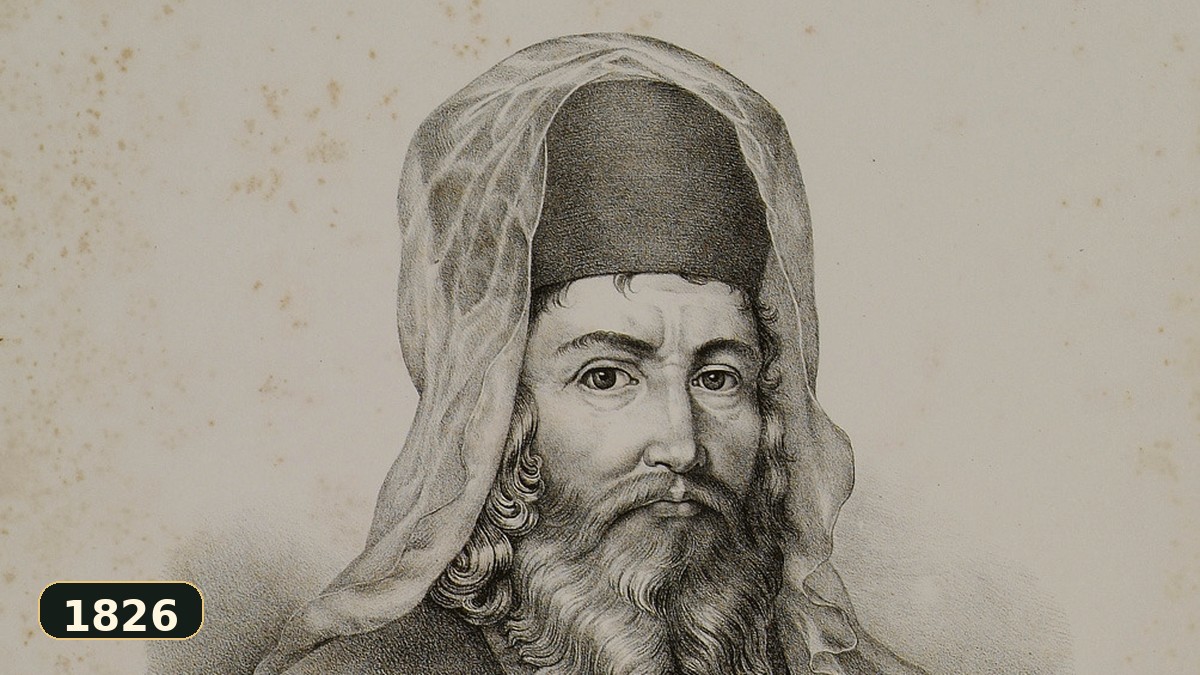
1826
1826
People
Death and Memory of Germanos of Old Patras
Germanos of Old Patras dies in 1826; Dimitsana preserves his house and revolutionary memory.
Why it matters
It closes the arc of one of Dimitsana’s central revolutionary church figures and binds his public role back to local memory.
Modern memory
1832
1832
Buildings
Agios Charalambos Cathedral
Historic church with dual feast days and notable stonework.
Why it matters
The cathedral reflects the post-Revolution civic and religious life of the settlement.
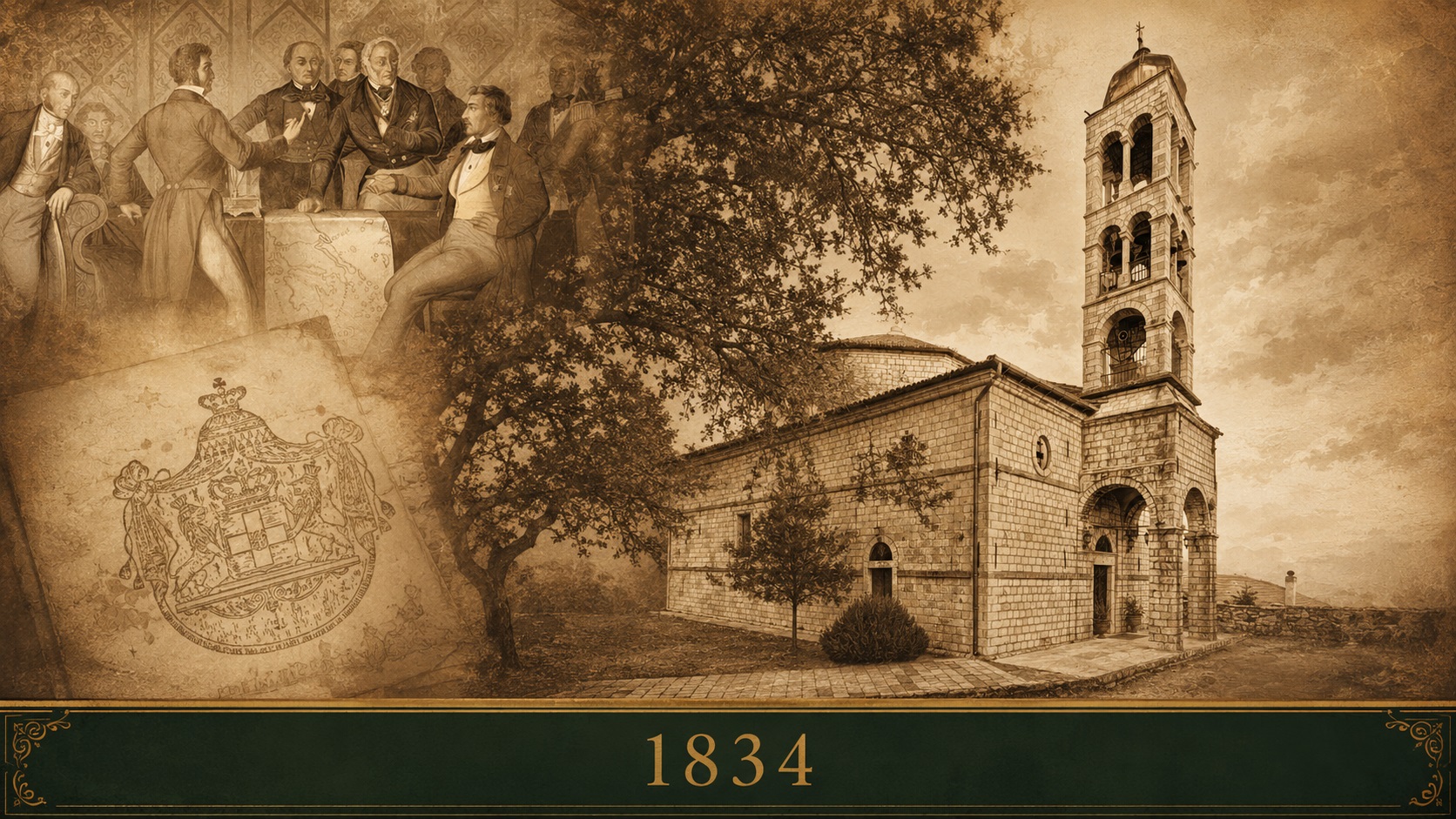
1834
1834
Buildings
Agia Kyriaki Cathedral
Historic church and cultural landmark in the heart of Dimitsana.
Why it matters
It stands as a landmark of the village center and of the continuity of parish life.
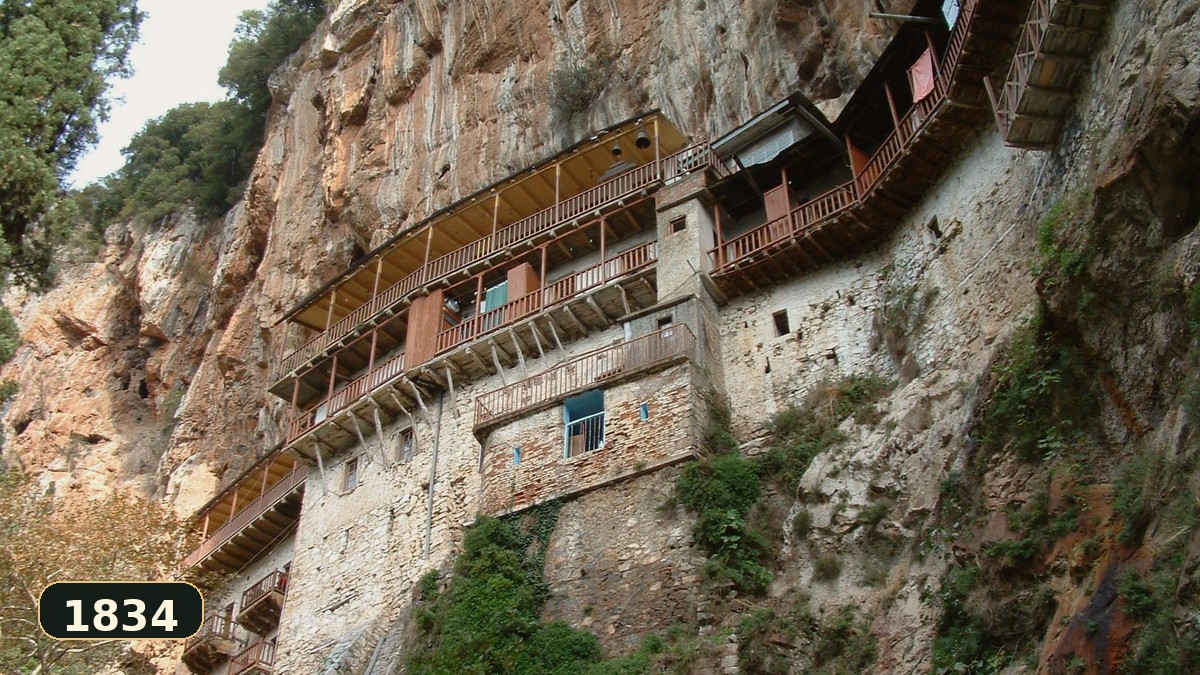
1834
Events
Early Greek-State Reforms and Prodromos Monastery
The monastery enters the difficult period of early Greek-state monastic reforms and later survival.
Why it matters
It shows that the monastic monuments survived not only Ottoman rule and revolution, but also the administrative transformations of the new Greek state.
1834
Events
Dimitsana in the newly formed Municipality of Thisoa
In 1834 Dimitsana was included in the new Municipality of Thisoa; in 1875 the municipality was renamed Municipality of Dimitsani.
Why it matters
The entry links Dimitsana’s older local identity with the administrative reorganization of the new Greek state.
1838
1838
Events
War Songs are published
The 1838 collection of patriotic songs preserves the martial and poetic memory of the Revolution.
Why it matters
It shows how the Revolution survived not only as battle history, but also as song, printed memory and public performance.
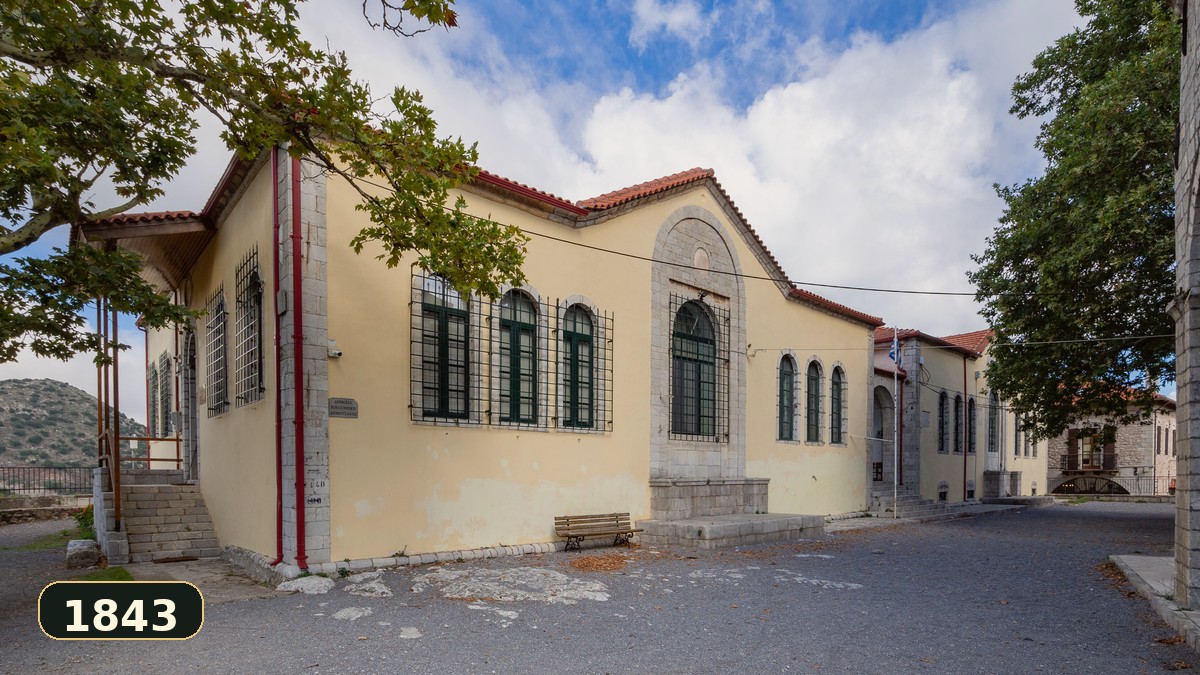
1843
1843
Events
The Library becomes a public service
The Historical Library of Dimitsana is recognized as a public service by law in 1843.
Why it matters
It marks the transformation of the school-library tradition into a lasting public cultural institution.
1845
1845
Buildings
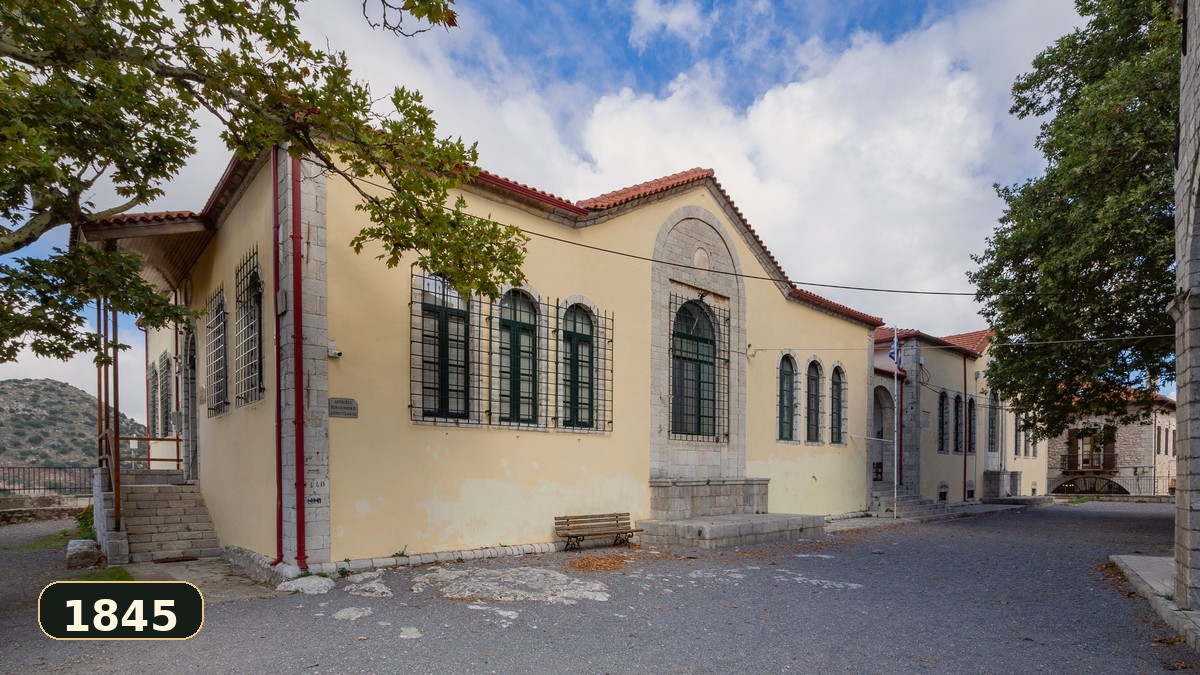
The Library building at Agia Kyriaki Square
The Library building is erected in 1845 on the site of the School, funded by Nikolaos Makris.
Why it matters
The building joins the School, the Library, Agia Kyriaki square, architecture and benefaction into one central civic landmark.
1846
1846
Events
Kolokotronis’ Memoirs are printed
The 1846 publication of Kolokotronis’ memoirs turns revolutionary experience into documentary memory.
Why it matters
It anchors the 1821 story in a primary printed source and strengthens the Library’s role as a keeper of revolutionary memory.
1874
1874
People
Takis Ch. Kandiloros
The Dimitsanite historian, folklorist and journalist who helped shape the written historical memory of the village.
Why it matters
He gives the timeline a historian of Dimitsana itself: someone who preserved, framed and transmitted the village’s own story.
1894
1894
People
Ioannis Tsournos
A Dimitsanite connected with press distribution, public life and the Brotherhood of Dimitsanites.
Why it matters
He connects Dimitsana with modern print culture, association life and the organized diaspora.
1900
1900
Events
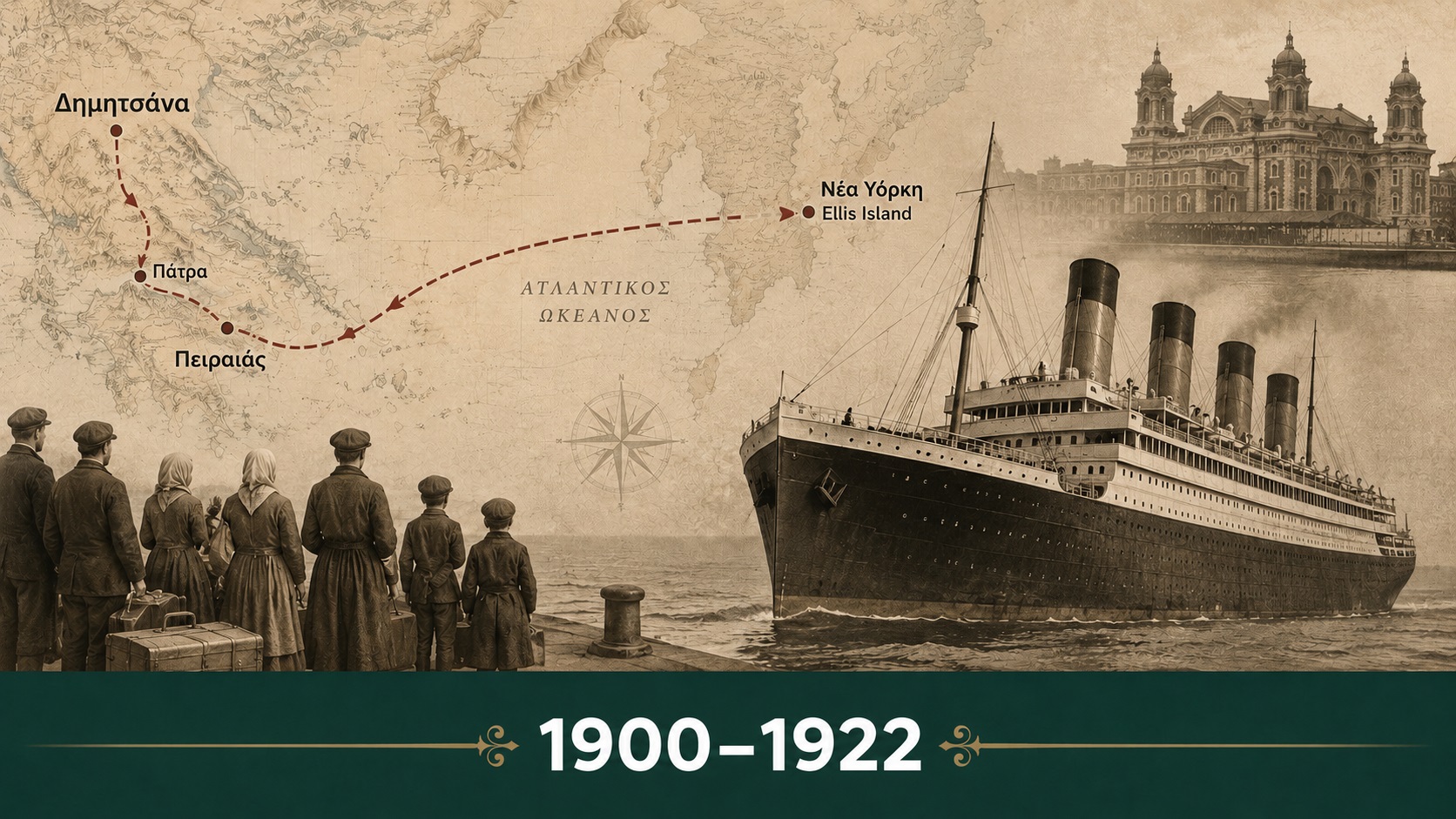
The first major migration wave
From 1900 to 1922 Dimitsanites joined the wider migration current toward urban centres and America.
Why it matters
This migration wave explains the later role of the Dimitsanite diaspora, especially in development, memory and associations.
1901
1901
Events
Restoration of Gregory V’s statue
A 1901 publication records the restoration of the statue of Patriarch Gregory V, turning memory into public monument.
Why it matters
It shows how Gregory V’s memory moved from biography and martyrdom into visible civic commemoration.
1910
1910
Buildings
The Former Girls’ School of Dimitsana
A neoclassical stone-built landmark, once a center of learning and later a courthouse.
Why it matters
The building keeps visible the importance of education in Dimitsana’s modern public life.
1910
Events
Dimitsanites write to Eleftherios Venizelos
Residents of Dimitsana appeal to Venizelos about taxation on gunpowder factories and the legacy of 1821.
Why it matters
It connects revolutionary memory with practical civic advocacy in the early 20th-century Greek state.
1911
1911
People
Tasos Gritsopoulos
A historian and philologist from Dimitsana who worked deeply with the Library and Peloponnesian archival material.
Why it matters
He represents the 20th-century scholarly continuation of Dimitsana’s library and school tradition.
1920
1920
Events
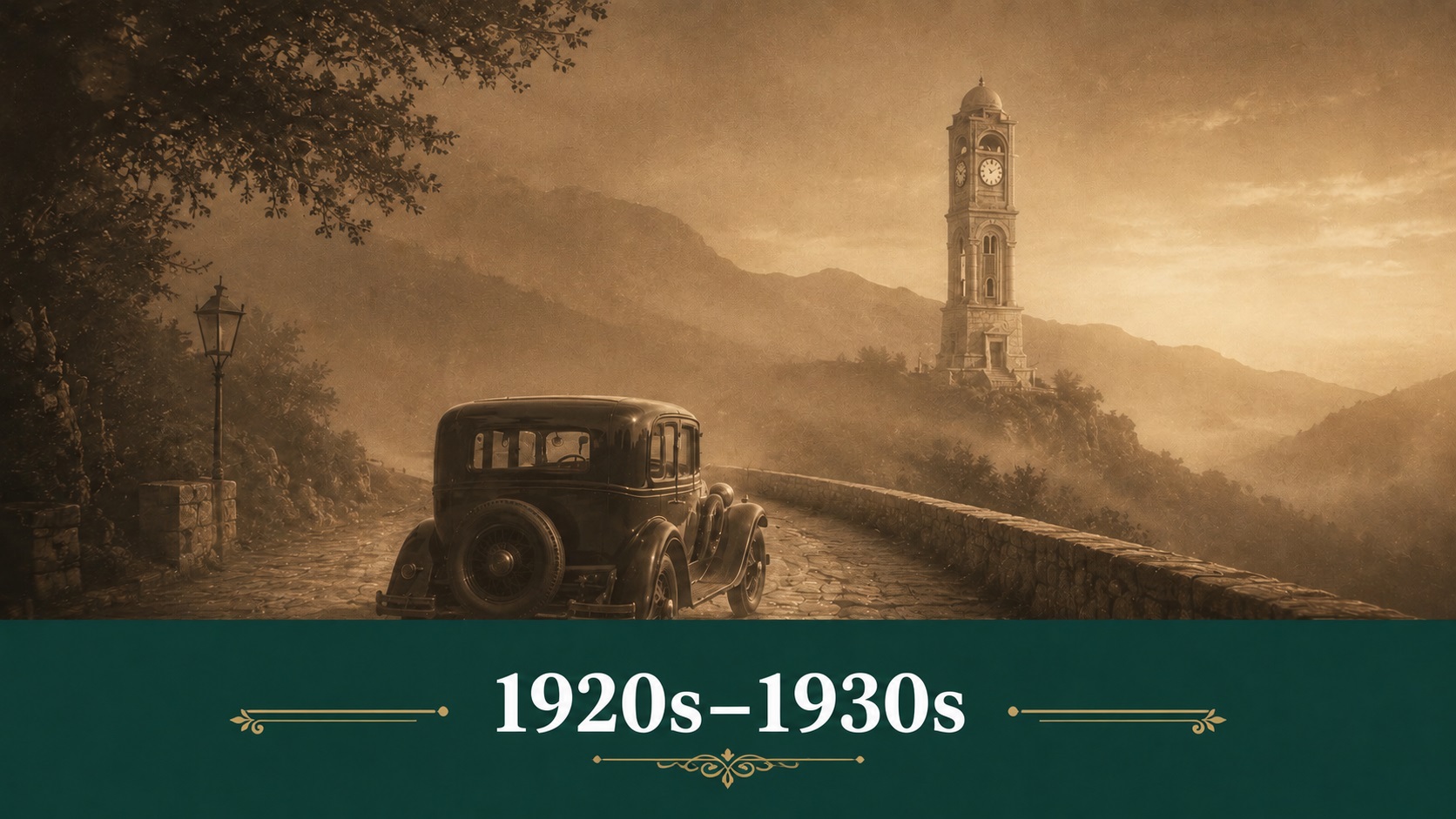
The interwar “golden age”
Return migration, investment, early electricity, cars and social life shaped the memory of interwar prosperity.
Why it matters
The interwar decades show that modern Dimitsana was shaped by return, investment, technology and changing expectations.
1930
1930
Buildings
Dimitsana Gymnasium (Kallithea)
Imposing two-storey stone school in Kallithea, completed in 1930 to plans by Ministry architect N. Mitsakis.
Why it matters
The gymnasium shows the 20th-century continuation of Dimitsana’s educational role.
1930
Events
The Lampadidromies custom begins
Oral testimonies connect the Dimitsana torch relay custom with students and March 25 celebrations from the 1930s.
Why it matters
It connects the Revolution of 1821 with living local tradition and the modern identity of the village.
1934
1934
Buildings
The Clock Tower of Dimitsana
A 27-meter marble clock tower, symbolizing heritage and diaspora unity.
Why it matters
The clock tower became a recognizable symbol of local pride, public space and diaspora contribution.
1934
Events
Schools and Library reorganization
Educational buildings around Agia Kyriaki are reorganized in 1934 through the Makris Bequest.
Why it matters
It connects architecture, education and benefaction in the modern civic core of Dimitsana.
1945
1945
Events
Brotherhood of Dimitsanites “Gregory V”
Founded in Athens in 1945 as a non-profit community organization.
Why it matters
The Brotherhood is the institutional bridge between migration, Athens, local development and the modern preservation of Dimitsana’s identity.
1948
30 August 1948
Events
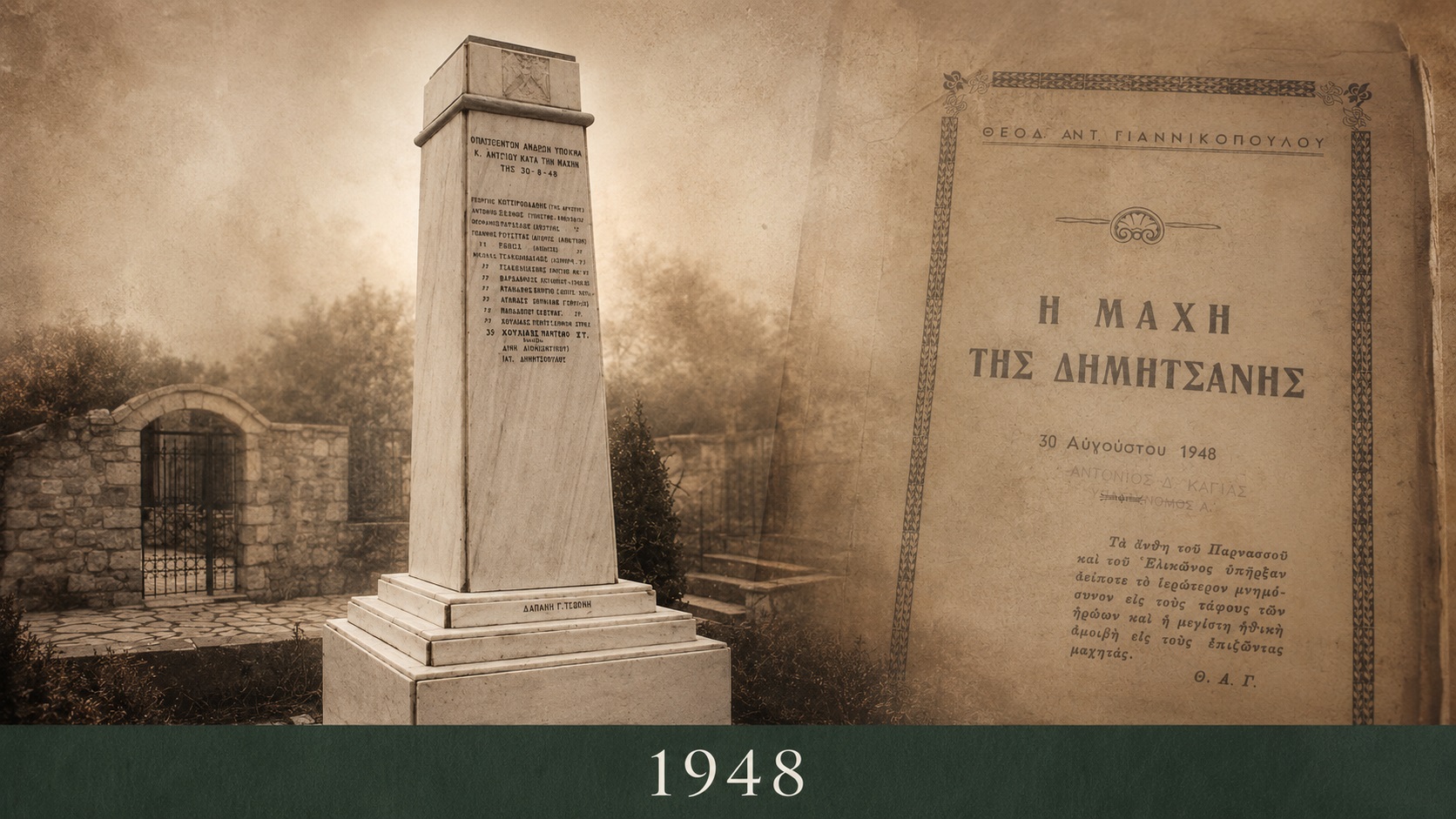
The Battle of Dimitsana
On 30 August 1948, during the Greek Civil War, forces of the Democratic Army in the Peloponnese attempted to capture Dimitsana. The fighting centered on key defensive positions such as Agia Paraskevi, the Castle and the settlement core, and ended with the attackers withdrawing without taking the town.
Why it matters
It marks one of Dimitsana’s most traumatic local episodes of the Greek Civil War and connects the village’s modern memory with difficult post-war narratives.
1950
1950
Events
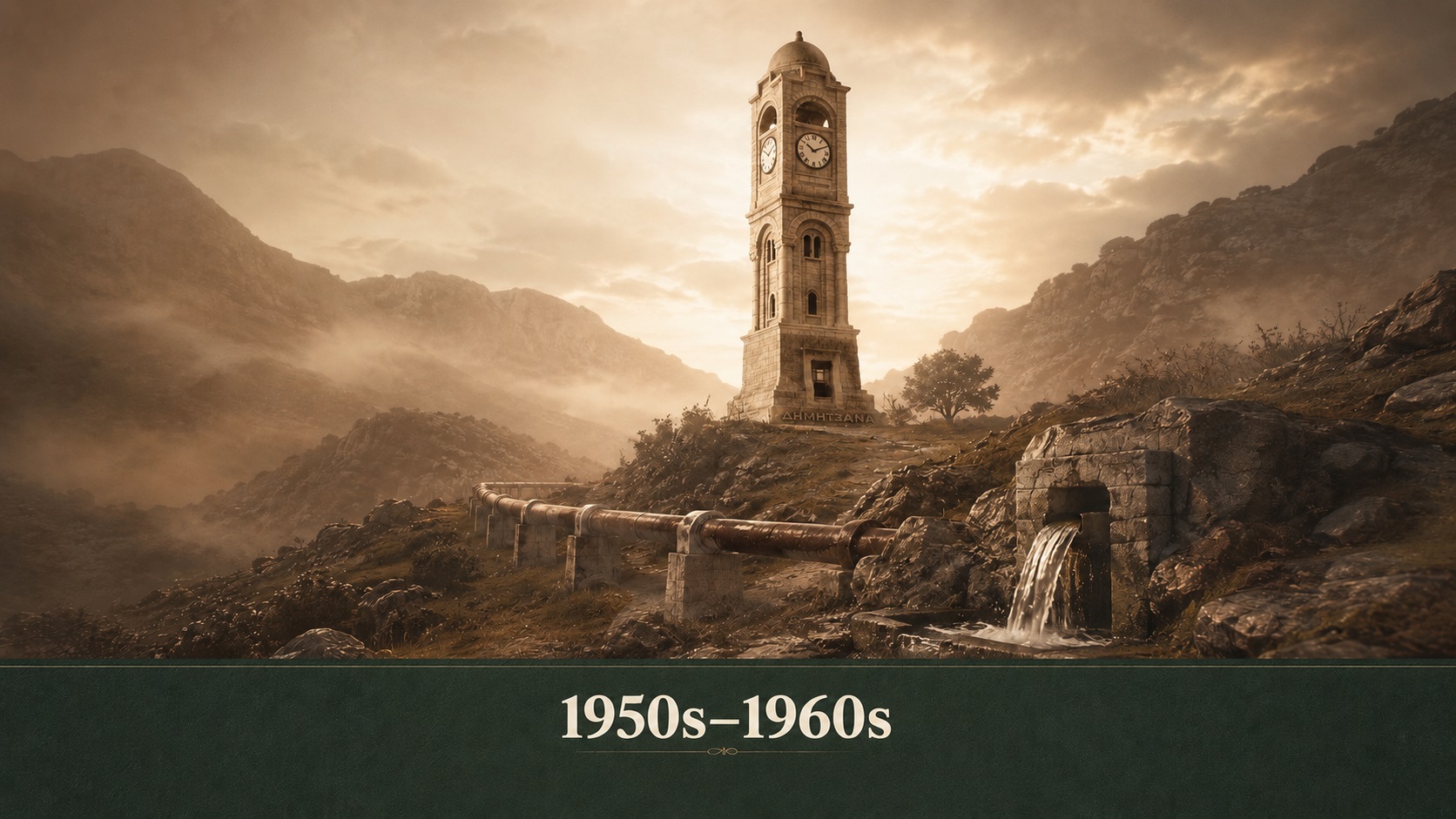
Water supply changes everyday life
The modern water-supply network began in the early 1950s and reached houses and shops by the late 1960s.
Why it matters
Water supply is a key everyday-life transformation: it marks the passage from public fountains and carrying water to the modern household.
1958
1958
Events
First issue of the newspaper “Dimitsana”
The first issue of the Brotherhood’s newspaper appears in December 1958, opening a long printed record of local memory.
Why it matters
It marks the beginning of a long-running newspaper archive that records modern Dimitsana across decades.
1963
1963
Events
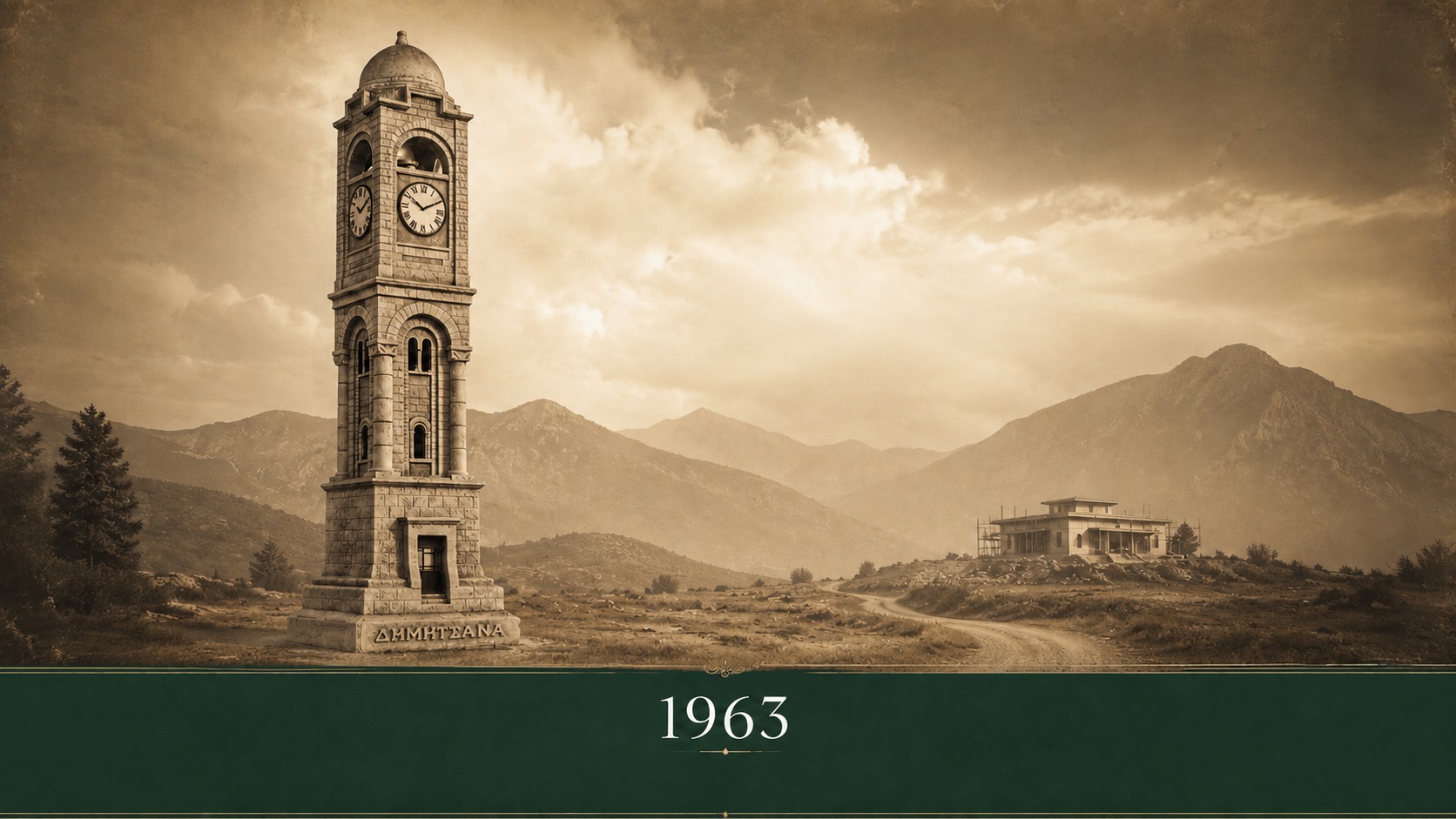
The hotel demand and the Tourist Pavilion
In 1963 tourism began to appear explicitly as a development strategy for Dimitsana.
Why it matters
The Tourist Pavilion marks the early shift from older development dreams to tourism as a concrete local strategy.
1968
1968
People
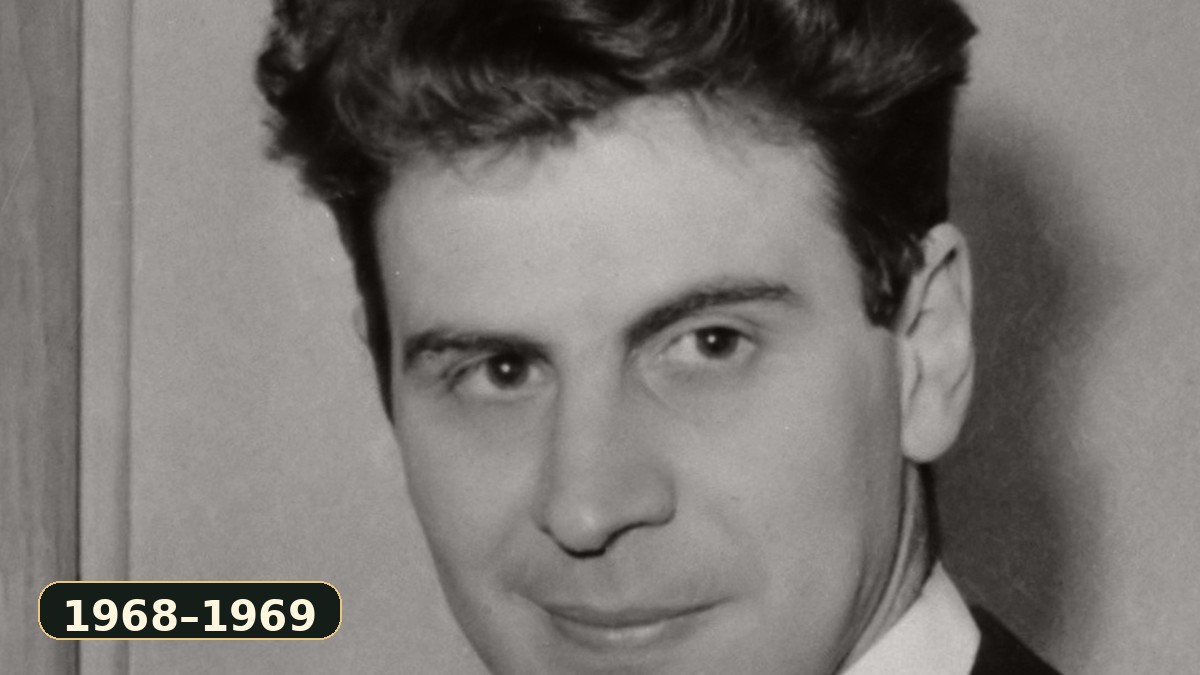
Mikis Theodorakis in exile at Zatouna
During the dictatorship, Mikis Theodorakis is exiled to nearby Zatouna from August 1968 to October 1969.
Why it matters
It adds a 20th-century cultural and democratic-memory chapter to the wider Dimitsana landscape.
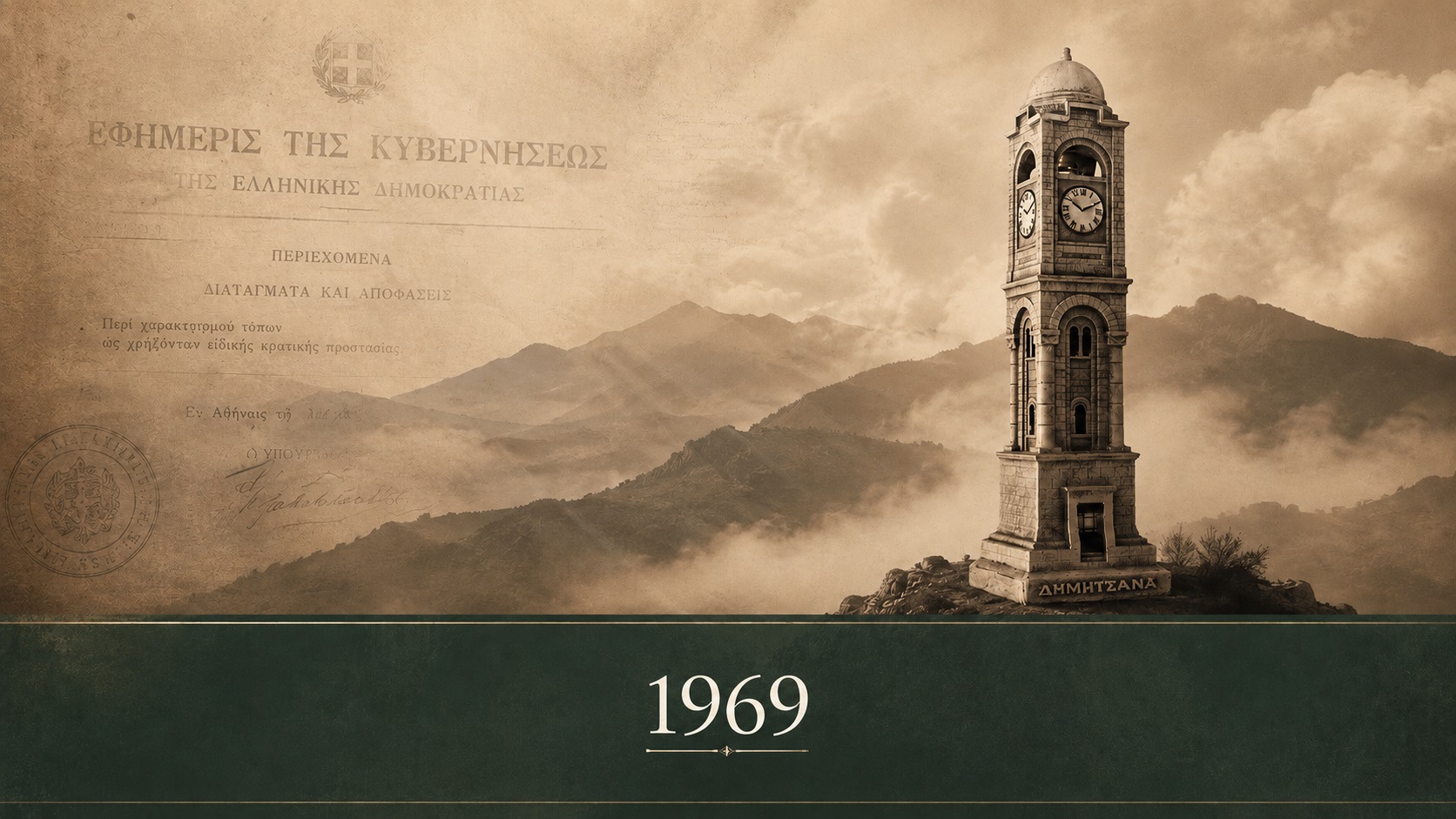
1969
1969
Events
First protective designation of the settlement
In 1969 Dimitsana was designated a settlement of historic and special natural beauty.
Why it matters
The 1969 designation is the necessary precursor to understanding the later traditional-settlement protection of 1978.
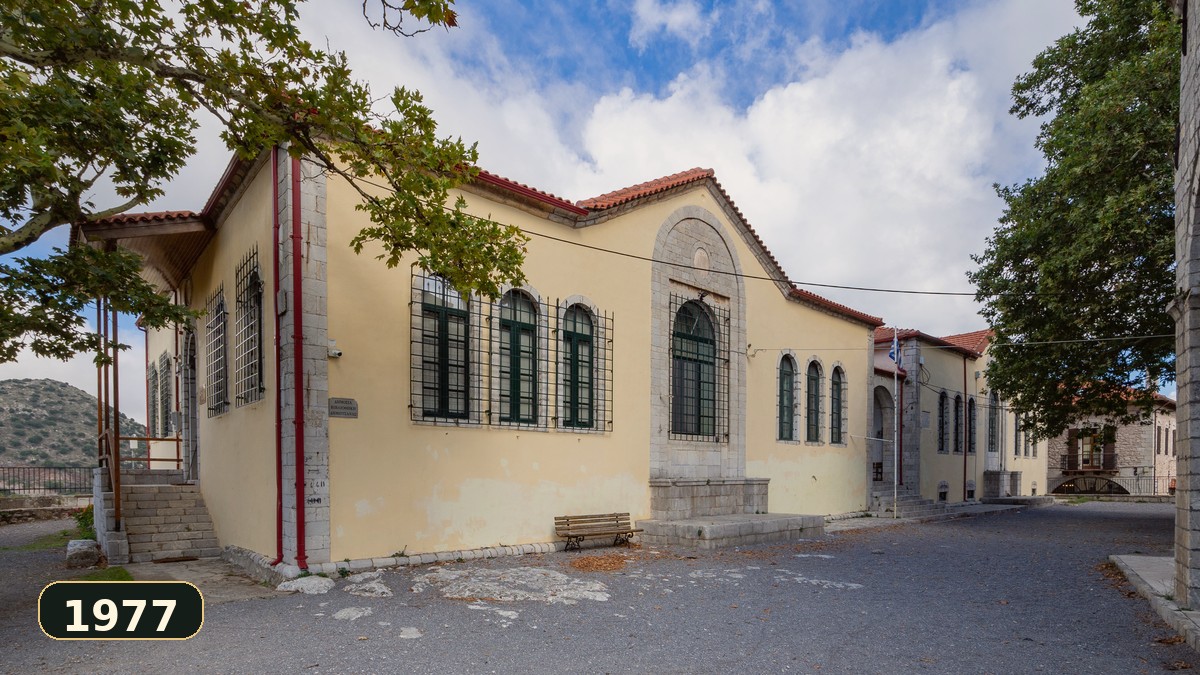
1977
1977
Events
Academy of Athens honors the Library
The Academy of Athens awards the Historical Library of Dimitsana a gold medal in 1977.
Why it matters
It confirms the Library’s national cultural value, not only its local importance.
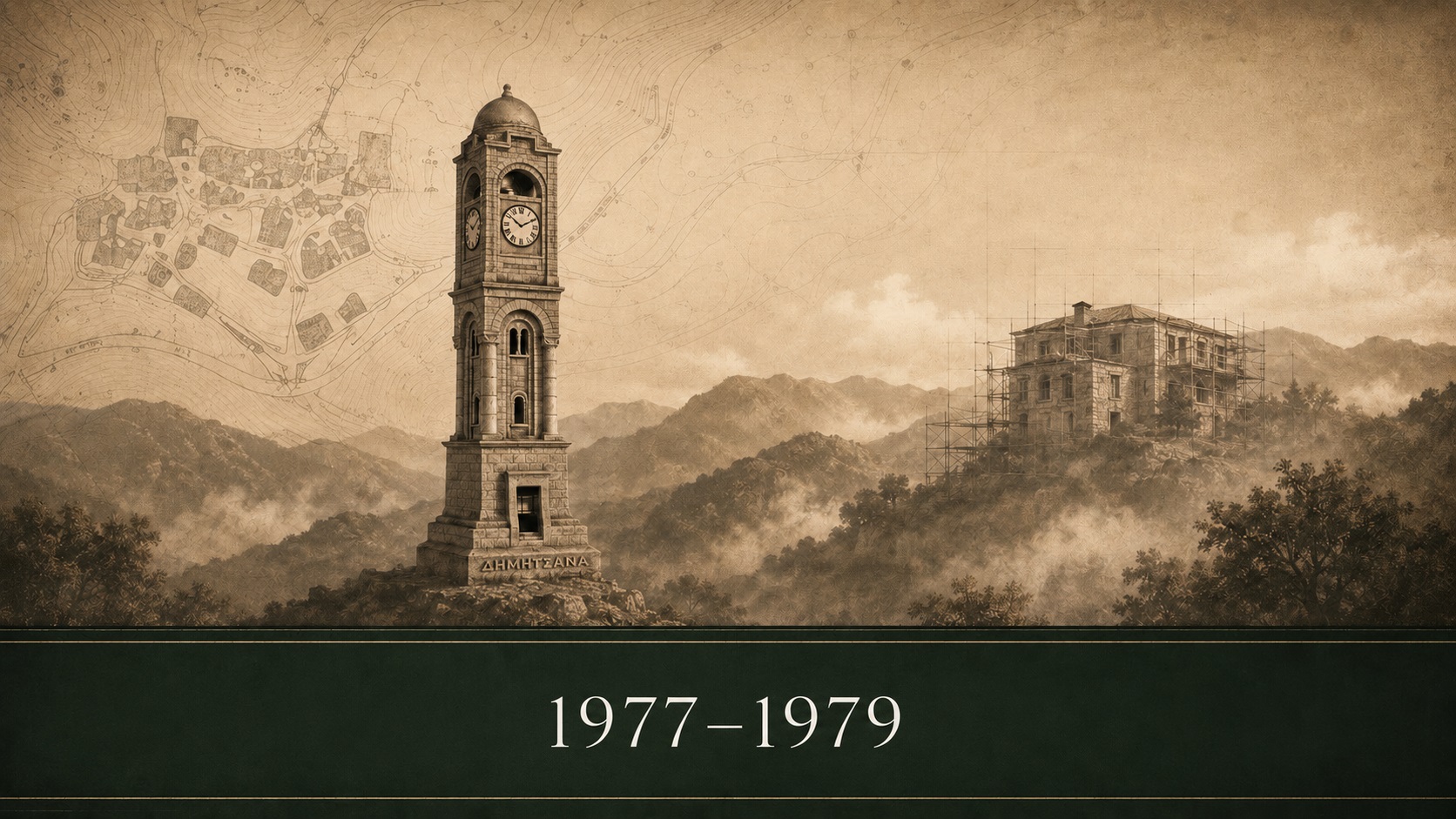
1977
Events
The EOT program in Dimitsana
In the late 1970s the EOT Traditional Settlements program connected restoration, tourism and heritage policy.
Why it matters
This entry is the missing bridge between settlement protection, restoration policy, tourism and the museum landscape of Aghianis.
1978
1978
Events
Dimitsana designated a Traditional Settlement
On 19 Oct 1978, Dimitsana was designated a preserved settlement by Presidential Decree.
Why it matters
The designation turned architectural preservation from a disputed restriction into a central part of Dimitsana’s future identity.
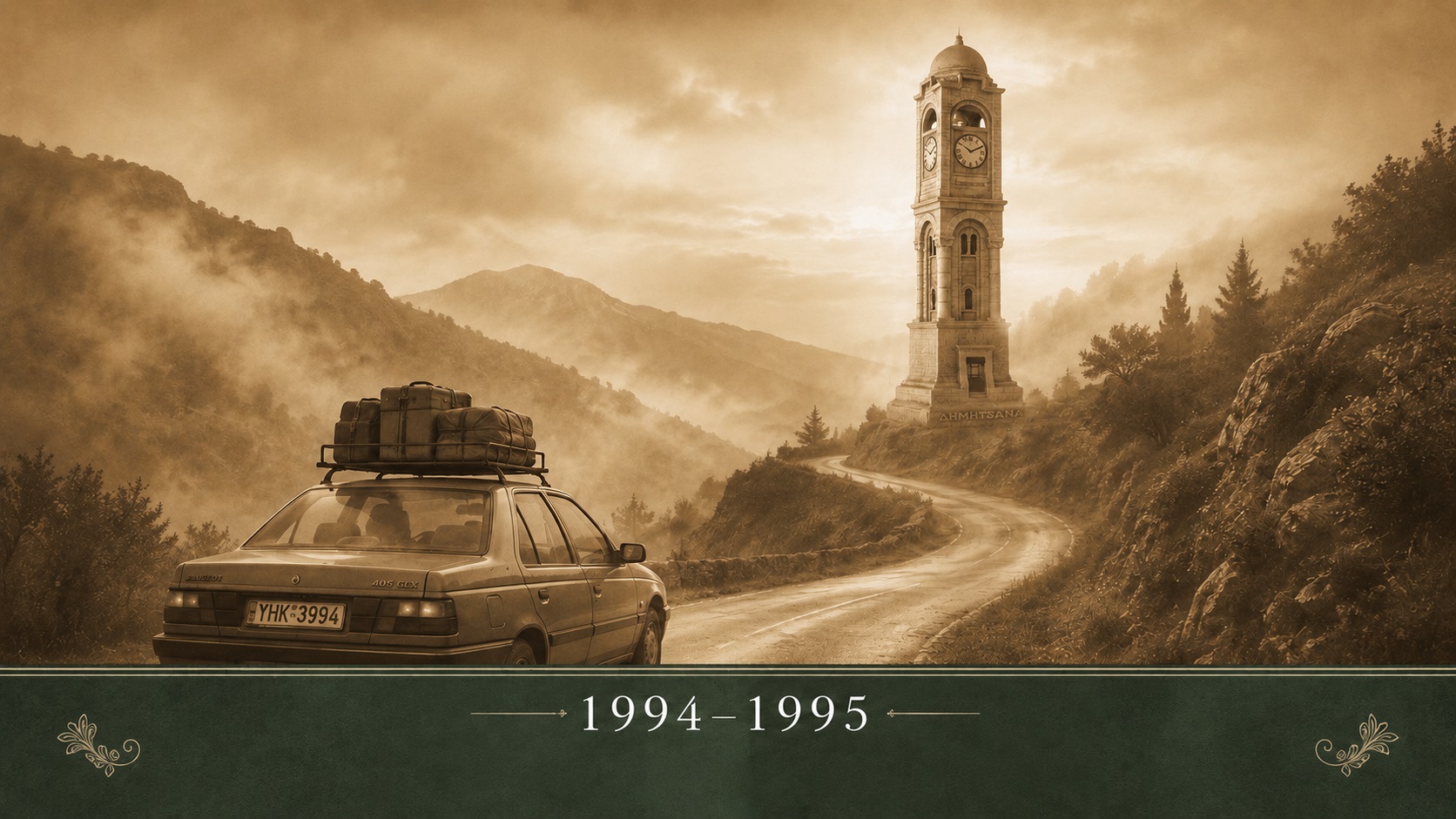
1994
1994
Events
The arrival of tourism in Dimitsana
By 1994–1995 tourism, restoration and guesthouses had become visible forces in the settlement.
Why it matters
This is the practical turning point when the protected settlement becomes a mountain cultural destination.
1997
1997
Buildings
Open-Air Water Power Museum
A living showcase of water-powered crafts and history in Arcadia.
Why it matters
The museum turned old productive technology into living heritage and helped Dimitsana become an alternative cultural destination.
2000
2000
Events
The Makaronas Carnival custom returns
Dimitsana’s Makaronas carnival custom is presented as a modern living expression of satire, memory and local identity.
Why it matters
It shows that cultural memory in Dimitsana is also performed through living customs, not only preserved in monuments and books.
2011
2011
Events
A mountain municipality of Arcadia, later merged into Gortynia.
Why it matters
The reform marks Dimitsana’s administrative transition into the wider municipality of Gortynia.
2015
2015
Events
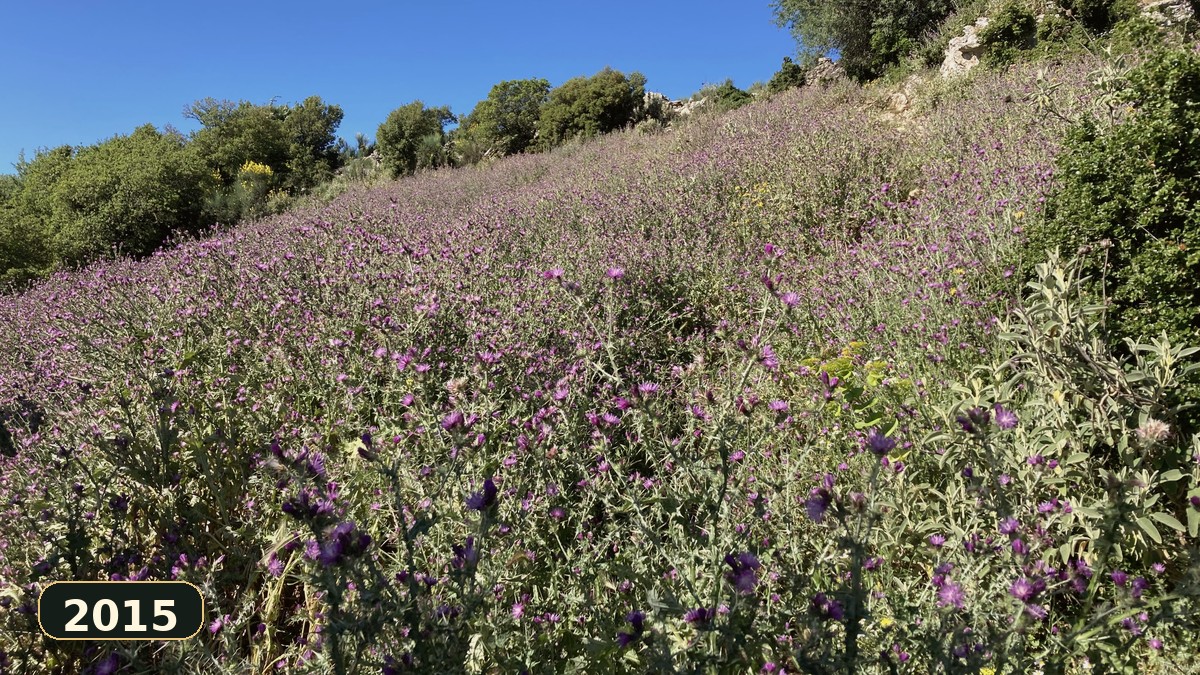
Menalon Trail receives European certification
The Menalon Trail joins the European Leading Quality Trails network on 31 May 2015.
Why it matters
It connects Dimitsana’s heritage with contemporary walking tourism, landscape interpretation and sustainable discovery.
2025
2025
Events
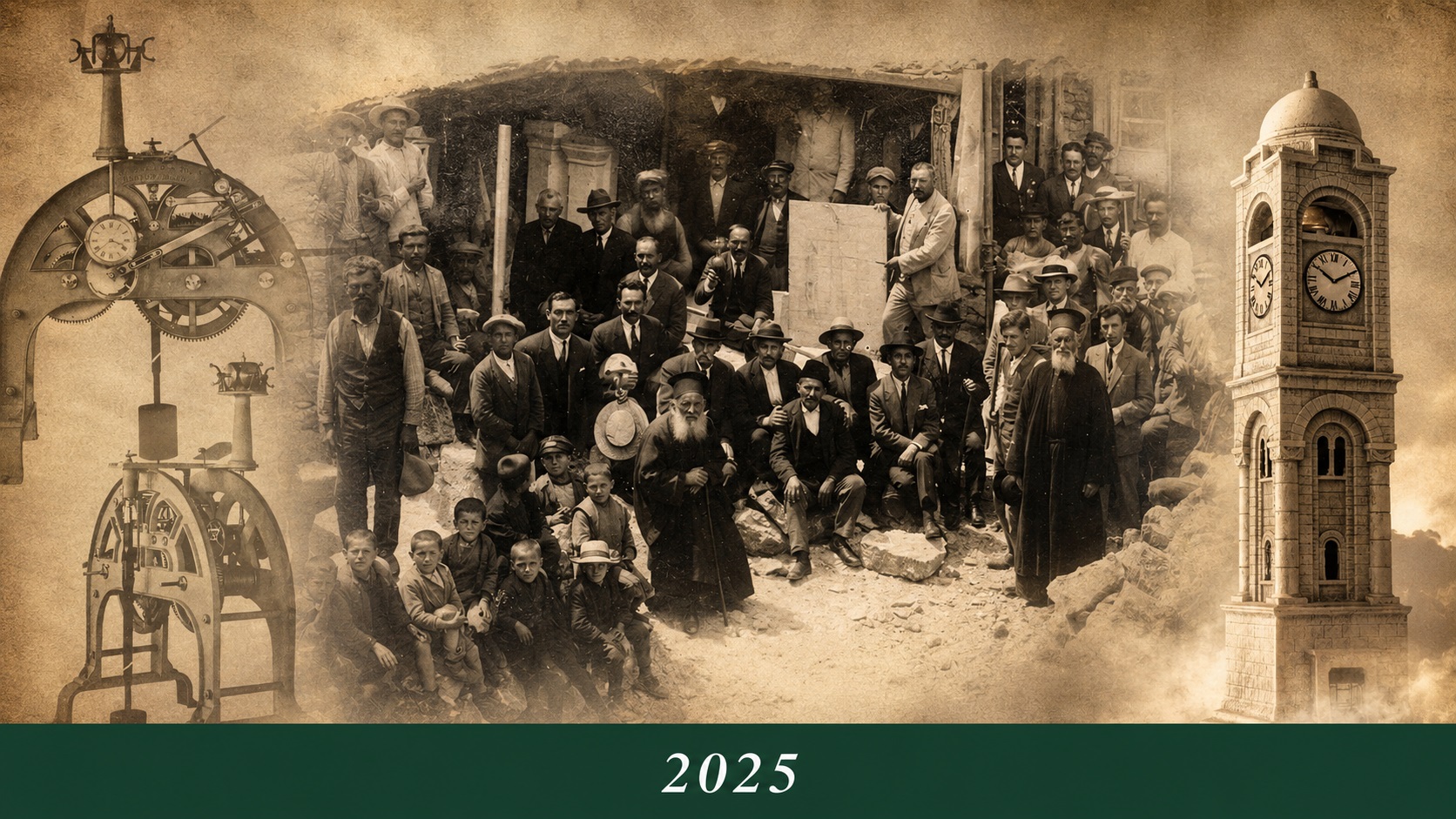
Dimitsana Clock Tower designated a monument
The Clock Tower of Dimitsana is officially designated a monument, recognizing its architectural, technical, artistic and symbolic value.
Why it matters
The 2025 designation transforms the Clock Tower from a beloved local landmark into an officially protected cultural monument.
No results match your filters.